

Research
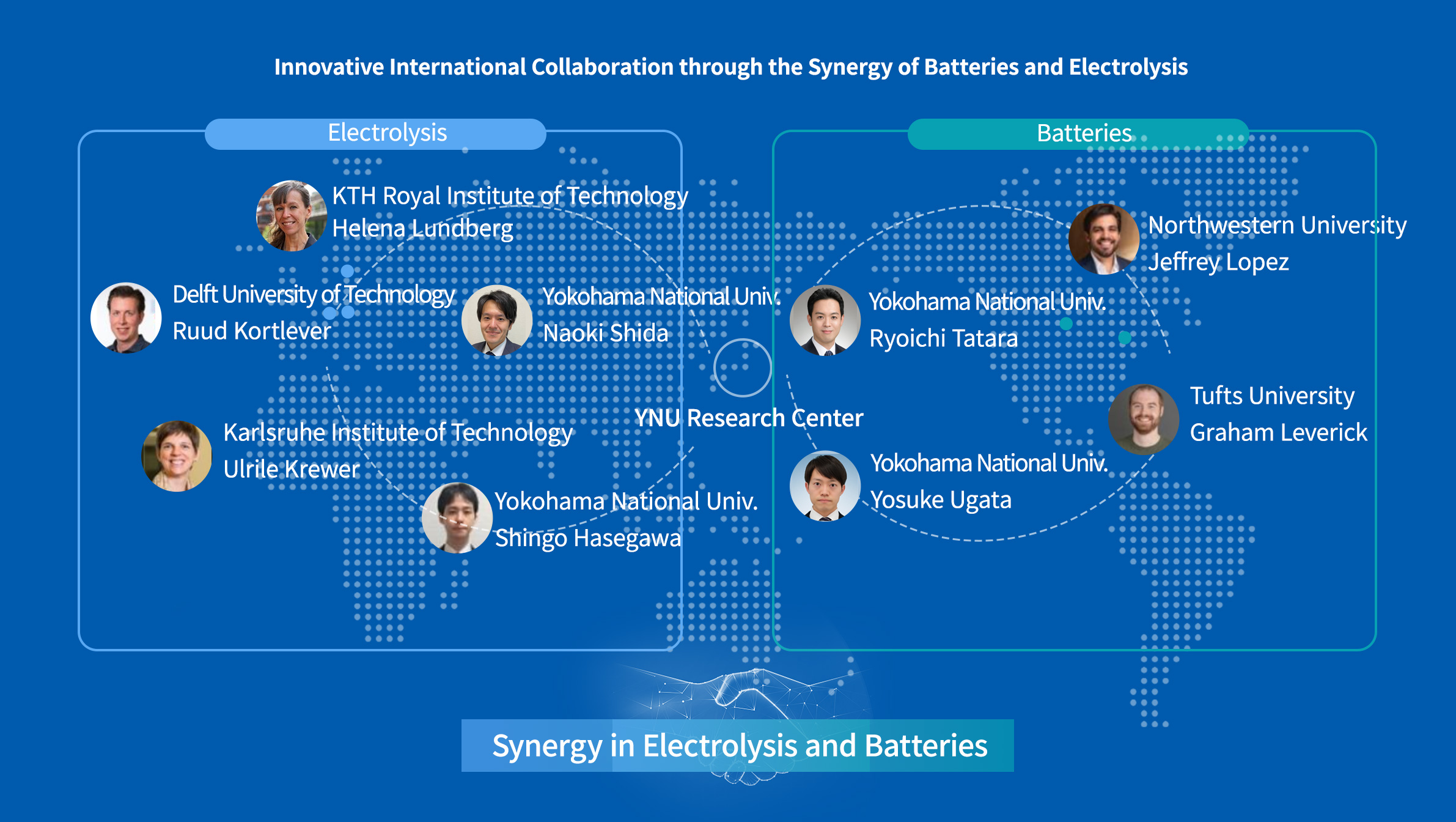
Our center is built around the project “Establishing a Global Research Hub for Synergistic Battery-Electrolysis Technologies,” which was selected in FY2025 under the JST ASPIRE for Rising Scientists program (Adopting Sustainable Partnerships for Innovative Research Ecosystem) of the Japan Science and Technology Agency (JST). Through international collaborative research between early-career researchers at Yokohama National University and researchers from around the world, the center aims to advance battery and electrolysis technologies and promote synergy between these two fields.
The JST ASPIRE program promotes international collaborative research between leading researchers in Japan and those in scientifically advanced countries and regions. Launched in FY2023, the program supports agile and flexible research collaborations in strategically important advanced fields led by the Japanese government.
The program also aims to encourage the participation of Japanese researchers in global cutting-edge research networks while fostering the next generation of researchers and strengthening international exchange and collaboration. Through these efforts, the program seeks to establish sustainable international research networks and create a positive cycle of global circulation of talent and knowledge.
CO₂ and Lignocellulosic Biomass Conversion
Sustainable chemical processes are being investigated to directly synthesize high-value chemicals, which serve as precursors for pharmaceuticals and polymer materials, from CO₂ and plant-derived biomass using renewable energy.
Sodium-Ion Batteries
Toward the realization of next-generation energy storage systems based on resource-abundant sodium, research is conducted to develop high-efficiency and long-life energy storage devices through the precise design of electrolytes and electrode interfaces.
Metal-Air Batteries
The reaction mechanisms of metal–air batteries, an ultimate energy storage system that uses oxygen as the cathode active material, are being elucidated. Through optimization of the electrolyte, the research aims to achieve dramatically improved capacity and reversibility far beyond those of conventional systems.
CO₂ Batteries
The concepts of energy storage and electrolysis are integrated to construct an innovative system in which CO₂ is absorbed, released, and converted during the charge–discharge processes of batteries. This research aims to propose new technologies that support the realization of a carbon-neutral society.